If you’re working in construction, woodworking, or DIY building, a good impact driver is one of the most important tools you’ll own. The right one should deliver high torque, long battery life, compact size, and durability for daily job site use.
In 2026, the top three brands still dominate the market: DeWalt, Milwaukee Tool, and Makita. Each has strengths depending on whether you care more about raw power, balance, or long-term reliability.
Below are the best impact drivers you can buy right now.
At a Glance (Quick Picks)
If you’re in a hurry, here are the best impact drivers in 2026 based on real job site performance:
- 🏆 Best Overall: Milwaukee M18 FUEL 2953-20 Impact Driver – Maximum power + durability
- 💰 Best Value: DeWalt DCF845B 20V MAX XR Impact Driver – Great performance for the price
- 🎯 Best Precision Control: Makita XDT16Z 18V LXT Impact Driver – Smoothest control for finish work
If you work construction, framing, or remodeling, these three brands still dominate the industry in 2026.
Why Impact Drivers Matter More Than Ever
An impact driver is one of the most important tools on any job site. It replaces a standard drill for most fastening tasks and gives you:
- Higher torque for lag bolts and structural screws
- Faster driving speed
- Less wrist strain compared to drills
- Better performance in tough materials like treated lumber
In 2026, almost every contractor carries at least one impact driver—and most carry the same big three brands: Milwaukee, DeWalt, and Makita.
But choosing the right one depends on your trade, budget, and how you work.
Milwaukee M18 FUEL 2953-20 – Best Overall Impact Driver
Check Best Prices on Amazon: Milwaukee M18 FUEL 2953-20 Impact Driver
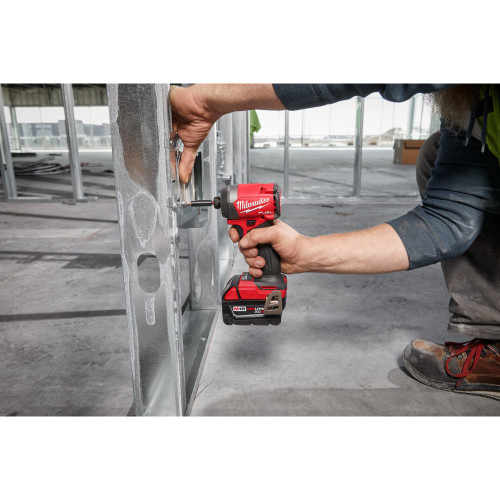
Milwaukee M18 FUEL 2953-20 Impact Driver
The Milwaukee M18 FUEL is widely considered the most powerful and balanced impact driver in 2026.
Key Features
- Extremely high torque output (built for heavy-duty fastening)
- Compact design for tight framing spaces
- Advanced electronic drive modes
- Brushless motor for longer lifespan
- Excellent battery efficiency on M18 platform
Real Job Site Performance
This is the tool you’ll see most often on framing crews, deck builders, and general contractors. It drives long structural screws into dense lumber without hesitation.
Where it stands out is consistency—you don’t lose power under load like cheaper tools.
Pros
- Top-tier power and speed
- Extremely durable
- Excellent for framing, decking, and structural work
- Compact but powerful
Cons
- Higher price point
- Can be overkill for light DIY work
Best For:
- Framers
- Contractors
- Heavy construction work
DeWalt DCF845B – Best Value Impact Driver
Check Best Prices on Amazon: DeWalt DCF845B 20V MAX XR Impact Driver

The DeWalt DCF845B is the sweet spot between price and performance.
Key Features
- Strong brushless motor
- Compact XR design for tight spaces
- Solid torque for most construction tasks
- Excellent battery ecosystem (20V MAX line)
Real Job Site Performance
This tool handles everything from framing screws to lag bolts without issue. While it doesn’t hit Milwaukee-level brute force, it’s more than enough for 90% of users.
Pros
- More affordable than Milwaukee
- Lightweight and comfortable
- Strong everyday performance
- Huge battery ecosystem
Cons
- Slightly less torque than Milwaukee
- Not the best for extreme heavy-duty use
Best For:
- Carpenters
- Remodelers
- General contractors on a budget
Makita XDT16Z – Best Precision Control Impact Driver
Check Best Prices on Amazon: Makita XDT16Z 18V LXT Impact Driver

Makita is known for smooth, controlled driving, and the XDT16Z is one of the best precision impact drivers available.
Key Features
- 4-speed power selection modes
- Precision drive technology reduces stripping
- Ultra-smooth trigger response
- Compact and lightweight design
Real Job Site Performance
This is the go-to tool for finish carpentry, cabinetry, and detailed work. It’s not the most powerful, but it gives you unmatched control when driving smaller fasteners.
Pros
- Best control and precision
- Lightweight and ergonomic
- Great for finish work
- Very reliable
Cons
- Less torque than Milwaukee/DeWalt
- Not ideal for heavy framing work
Best For:
- Trim carpenters
- Cabinet installers
- Finish work professionals
Impact Driver Comparison (2026)
| Feature | Milwaukee M18 FUEL | DeWalt DCF845B XR | Makita XDT16Z |
|---|---|---|---|
| Power | ⭐⭐⭐⭐⭐ | ⭐⭐⭐⭐ | ⭐⭐⭐ |
| Control | ⭐⭐⭐⭐ | ⭐⭐⭐⭐ | ⭐⭐⭐⭐⭐ |
| Durability | ⭐⭐⭐⭐⭐ | ⭐⭐⭐⭐ | ⭐⭐⭐⭐ |
| Weight | ⭐⭐⭐⭐ | ⭐⭐⭐⭐ | ⭐⭐⭐⭐⭐ |
| Best Use | Heavy construction | All-around use | Precision finish work |
What to Look For in an Impact Driver (Buyer’s Guide)
Before buying any impact driver in 2026, focus on these key factors:
1. Torque (Driving Power)
Torque determines how well the tool handles:
- Lag bolts
- Structural screws
- Dense hardwoods
Higher torque = better for framing and construction.
2. Speed Settings & Control Modes
Good impact drivers offer multiple modes to prevent:
- Stripped screws
- Overdriving fasteners
- Material damage
3. Battery Platform (VERY IMPORTANT)
Stick with one ecosystem:
- Milwaukee M18
- DeWalt 20V MAX
- Makita 18V LXT
This saves you hundreds over time on batteries and chargers.
4. Weight & Ergonomics
If you’re using the tool all day:
- Lighter = less fatigue
- Balanced grip = better accuracy
5. Job Type Matters
- Framing → Milwaukee
- General contracting → DeWalt
- Finish work → Makita
Common Mistakes Buyers Make
Buying the cheapest tool only
Cheap impact drivers often:
- Strip screws
- Burn out faster
- Waste more time on job sites
Mixing battery platforms
Switching brands = doubling your cost over time.
Overbuying power you don’t need
If you’re doing trim work, Milwaukee-level torque is unnecessary.
Final Recommendation (2026)
Here’s the simple breakdown:
- 🏆 Best Overall: Milwaukee M18 FUEL 2953-20 Impact Driver – For professionals and heavy-duty work
- 💰 Best Value: DeWalt DCF845B 20V MAX XR Impact Driver – Best all-around choice for most people
- 🎯 Best Precision: Makita XDT16Z 18V LXT Impact Driver – For finish carpentry and detailed work
If you’re building your tool kit long-term, start with one ecosystem and expand from there—don’t mix brands.
Related Posts
- Top Tool Finds on Amazon You Didn’t Know You Needed (2026) – forge trade gear
- Best Tool Backpacks for Contractors (2026 Guide) – forge trade gear
- Starter Tool Kit for Carpenters (Under $200 Setup That Actually Works) – forge trade gear
- Best Ankle High Rain Boots for Working Men (Top 3 Picks for 2026) – forge trade gear