Last updated: May 2026 | Reading time: ~9–11 minutes
Intro Dust from cutting, sanding, and routing isn’t just a cleanup problem — it affects accuracy, tool life, and your health. In 2026, shop vacuums and dust extractors range from compact jobsite vacs to HEPA-rated systems and modular cyclone setups. This guide breaks down the best models for miter saw dust collection, router setups, and general shop cleanup. You’ll get clear buying advice, pros/cons for each model, and actionable tips to get better dust capture today.
Quick picks (at a glance)
- Best Overall (Pro/Shop): Festool CT 36 AC Dust Extractor
- Best Budget: Shop-Vac 5-Gallon 5.0 Peak HP Portable
- Best for Miter Saws & Jobsite: DEWALT 9 Gallon Wet/Dry VAC, Heavy-Duty Shop Vacuum
- Best for Fine Woodworking & HEPA: Oneida Dust Deputy Low-Pro Deluxe Lid Dust Separator Kit
- Best for Routers & Portability: BOSCH VAC090AH Portable 9 Gallon
Why this matters: dust exposure, finish quality, and tool performance
- Health: Fine wood dust (especially oak, walnut, MDF) is a respiratory hazard. HEPA filtration and masks protect you.
- Finish quality: Fine dust settling on glue or finishes ruins the result.
- Tool life: Dust clogs motors and bearings; good extraction extends tool life.
Detailed reviews
Best Overall (Pro/Shop): Festool CT 36 AC Dust Extractor
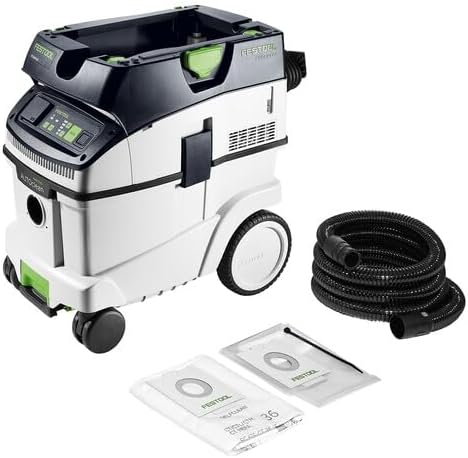
Check prices on amazon: Festool 577874 Dust Extractor CLEANTEC CT 36 EI AC HEPA
- Festool’s CT 36 AC is the gold standard for pros and finish shops. It offers automatic tool-trigger extraction, variable suction levels to match tools (sanders vs routers), excellent filtration, and compact maneuverability for a 36 L class unit. Why we like it:
- Auto-start when tool is powered, saves setup time
- HEPA-ready filtration catches ultrafine dust
- Quiet operation for interior finish work Key specs: 1,100–1,500 W variable motor; 36 L capacity; auto tool-trigger; HEPA filter compatibility Who should buy: Finish carpenters, cabinetmakers, contractors who prioritize air quality and convenience Pros: Excellent filtration, strong airflow at tool port, durable construction Cons: Premium price — worth it if you work indoors or do lots of finish work.
Best Budget: Shop-Vac 5-Gallon 5.0 Peak HP Portable

Check prices on amazon: Shop-Vac 5-Gallon 5.0 Peak HP Portable
- If you want something that’s cheap, durable, and useful for rough cleanup, the Shop-Vac 5-gallon is incredibly common for a reason. It’s great for pickup jobs, vacuuming debris, and as a backup on the jobsite. Why we like it:
- Very affordable and easy to service
- Wide availability of replacement parts and accessories Key specs: 5-gallon capacity; 5.0 peak HP; basic filter options Who should buy: Homeowners, weekend DIYers, users on a tight budget Pros: Low cost, simple design, good for general cleanup Cons: Not designed for ultra-fine dust capture; consider aftermarket HEPA filters or add a cyclone separator.
Best for Miter Saws & Jobsite: DEWALT 9-Gallon NXT Wet/Dry Shop Vacuum

Check prices on amazon: DEWALT 9 Gallon Wet/Dry VAC, Heavy-Duty Shop Vacuum
- Contractors need a durable vac that travels. The DEWALT NXT balances capacity and portability with good airflow and rugged housing that tolerates jobsite abuse. Why we like it:
- Sturdy wheels and carry handles for ease of transport
- Good attachments and adapter options for miter saw hoods and dust ports Key specs: 9-gallon capacity; rugged casing; multiple tool attachments Who should buy: Carpenters, remodelers, and contractors who move between sites Pros: Durable, good CFM for the class, built to jobsite standards Cons: Requires HEPA upgrades for fine dust capture in finish work.
Best for Fine Woodworking & HEPA: Oneida Dust Deputy + HEPA Vac Combo

Check prices on amazon: Oneida Dust Deputy Low-Pro Deluxe Lid Dust Separator Kit
- Use a cyclone pre-separator (Dust Deputy) to drop out chips before the vacuum sees the load; pair that with a HEPA-rated Shop Vacuum for air quality. This setup maximizes filter life and removes the finest dust. Why we like it:
- Cyclone reduces filter changes and maintains suction
- HEPA vac captures ultrafine particulate down to 0.3 microns Key specs: Cyclone separator capacity varies; HEPA-rated vac options Who should buy: Finish woodworkers and shops that need real air-quality control Pros: Best filtration strategy; long-term cost savings on filters Cons: Bigger footprint and more initial setup Image alt text: Oneida Dust Deputy cyclone separator connected to HEPA vacuum in shop
Best for Routers & Portability: BOSCH VAC090AH Portable 9 Gallon Shop Vacuum

Check prices on amazon: BOSCH VAC090AH Portable 9 Gallon
- Compact, powerful, and designed to interface with hand tools and routers — Bosch’s professional Shop Vacuums include HEPA options and tool-trigger functionality in a portable package. Why we like it:
- Small footprint but strong suction at the tool port
- Easy hose routing for handheld routers and small benches Key specs: 15 L class; auto-start with tools on compatible models; HEPA filter options Who should buy: Woodworkers who move between benches and need reliable extraction for routers Pros: Compact, quiet, purpose-built for tool extraction Cons: Pricier than consumer vacs; still not as simple to set up as a single plug-and-play unit.
Comparison Model — Capacity — HEPA Ready — Auto Tool Trigger — Best For
- Festool CT 36 AC — 36 L — Yes — Yes — Pro shops, finish work
- Shop-Vac 5-Gallon — 5 gal — No (basic) — No — Budget cleanup, light-duty
- DEWALT 9-Gallon NXT — 9 gal — Optional — No — Jobsite miter saws
- Oneida Dust Deputy + HEPA — Varies — Yes — Depends — Fine woodworking
- BOSCH VAC090AH Portable 9 Gallon — 15 L — Yes — Yes — Routers, portable use
Shop vacuum & dust extractor buying checklist (what to look for)
- Airflow (CFM) at the tool port — this is critical for routers and miter saws.
- Static pressure (inches of water) if available — helps with long hoses and restrictive hoods.
- HEPA certification and filter replacement cost.
- Auto-start compatibility with your power tools.
- Hose internal diameter — bigger ID preserves airflow.
- Dust port compatibility with tool dust hoods (common sizes: 1-1/4″, 1-1/2″, 2-1/2″).
- Noise level — dB ratings matter for long indoor jobs.
Setup & performance tips
- Use the shortest, straightest hose possible and avoid small-diameter hoses for miter saws/routers.
- Add a cyclone pre-separator (Dust Deputy-style) for sanding/routing to extend filter life.
- Seal dust hood joints with HVAC tape or gaskets for better capture.
- Run the vacuum before powering your tool to establish airflow, unless you use auto-start.
- Replace leaking hoses and worn seals — they kill suction.
Maintenance & filter care
- Tap or vacuum pre-filters weekly on heavy use; replace HEPA filters per manufacturer guidance.
- Inspect hose and port for clogs regularly — large chips can restrict airflow quickly.
- Store filters dry and replace if they smell or discolor.
Safety & health
- Even with HEPA Shop Vacuum systems, wear a respirator (N95 or better) for sanding, MDF, or long sessions.
- Monitor fine dust accumulation on surfaces — that’s an indicator extraction isn’t sufficient.
- Carbon monoxide/ventilation: avoid running gas generators and vacs in enclosed spaces without ventilation.
What to read next
- The Best Miter Saw in 2026: Top Picks – forge trade gear
- Best Routers & Router Tables 2026 – forge trade gear
- Best Angle Grinders 2026 —Metal & Masonry – forge trade gear
- Best Table Saws of 2026 (Complete Guide for Contractors and DIYers) – forge trade gear
CTA
Affiliate disclosure Some links on this page may be affiliate links; we may earn a commission at no extra cost to you. We only recommend products we trust and would use ourselves.