Intro
Dust, workflow, and layout make or break your projects. Whether you’re starting a hobby shop or upgrading to a pro shop, this guide walks you through must-have tools, smart layout choices, dust-control strategies, lighting and power planning, storage, safety gear, consumables, and a printable setup checklist. It also includes upgrade paths so you can scale the shop without wasting money.
Quick overview — Starter vs Pro essentials Starter (small hobby shop / garage):
- Table saw (compact/hybrid), miter saw, compact router & trim router, random orbital sander, drill/impact combo, benchtop planer optional, sturdy workbench, basic dust collection (shop vac + hood), PPE.
Pro (full shop / cabinetmaker):
- Cabinet table saw, 12″ miter saw, router table + plunge router, dedicated dust extractor (HEPA/cyclone), jointer, thickness planer, bandsaw, wide bench, dust ducting, compressed air, heavy-duty storage.
Shop layout & workflow (the golden triangle)
- Work zones (A–D) to reduce movement and improve flow:
- Zone A — Cutting & Crosscutting: miter saw station, crosscut sled area
- Zone B — Rip & Dimensioning: table saw, outfeed table, planer/jointer nearby
- Zone C — Shaping & Joinery: router table, bandsaw
- Zone D — Finishing & Assembly: finishing table, clamps, drying racks
- Spacing rules: 36–48″ clearance in front of major stationary tools; 24–36″ around benchtop tools.
Power, lighting & ventilation
- Power: Dedicated 20A circuits for heavy tools; plan outlets every 4–6 ft; consider 240V for large machines.
- Lighting: Layered lighting — overhead LEDs (4000–5000K), task lamps at benches and machines.
- AFFILIATE_LINK: [AFFILIATE_LINK: LED-shop-light-affiliate-URL]
- Ventilation: Shop exhaust fan or ducted ventilation for solvent-based finishes.
- AFFILIATE_LINK: [AFFILIATE_LINK: ventilation-system-affiliate-URL]
Essential stationary tools (with image & affiliate placeholders)
Table saw (the shop’s heart)

- Why: ripping, joinery setups, crosscut sled work.
- Buy notes: accurate fence, miter slot alignment, stable top, reliable guard.
- DEWALT Table Saw, 10 Inch
Miter saw (trim & crosscuts)

- Why: quick, accurate crosscuts and crown molding.
- Recommendation: 12″ sliding dual-bevel for versatility; 8–10″ for tight shops.
- DEWALT Miter Saw, 12-inch Double Bevel Sliding Compound Miter Saw
Thickness planer

- Why: dimension stock to thickness; essential for furniture.
- JET Black 20-Inch Thickness Planer
Jointer

- Why: flatten faces & square edges before planing.
- Cutech 401120HI-IF 12-Inch Spiral Cutterhead Benchtop Jointer
Bandsaw

- Why: resawing, curves, and jigs.
- DeWalt 9″ Band Saw
Router + Router table
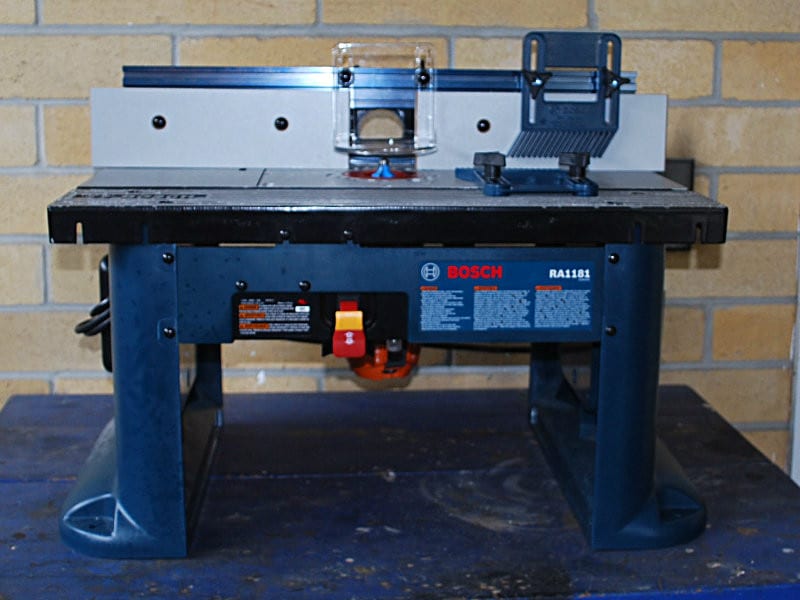
- Why: profiles, joinery, templates
- Bosch RA1141 Portable Benchtop Router Table
- Bosch 1617EVSPK 2.25 HP Combination Plunge- and Fixed-Base Router
Drill press

- Why: accurate holes and mortises.
- JET 12-Inch Benchtop Drill Press
Dust extractor / shop vacuum
- Why: protect lungs, keep finish quality, extend tool life.
- JET Vortex Cone Dust Collector
Workbench & assembly table
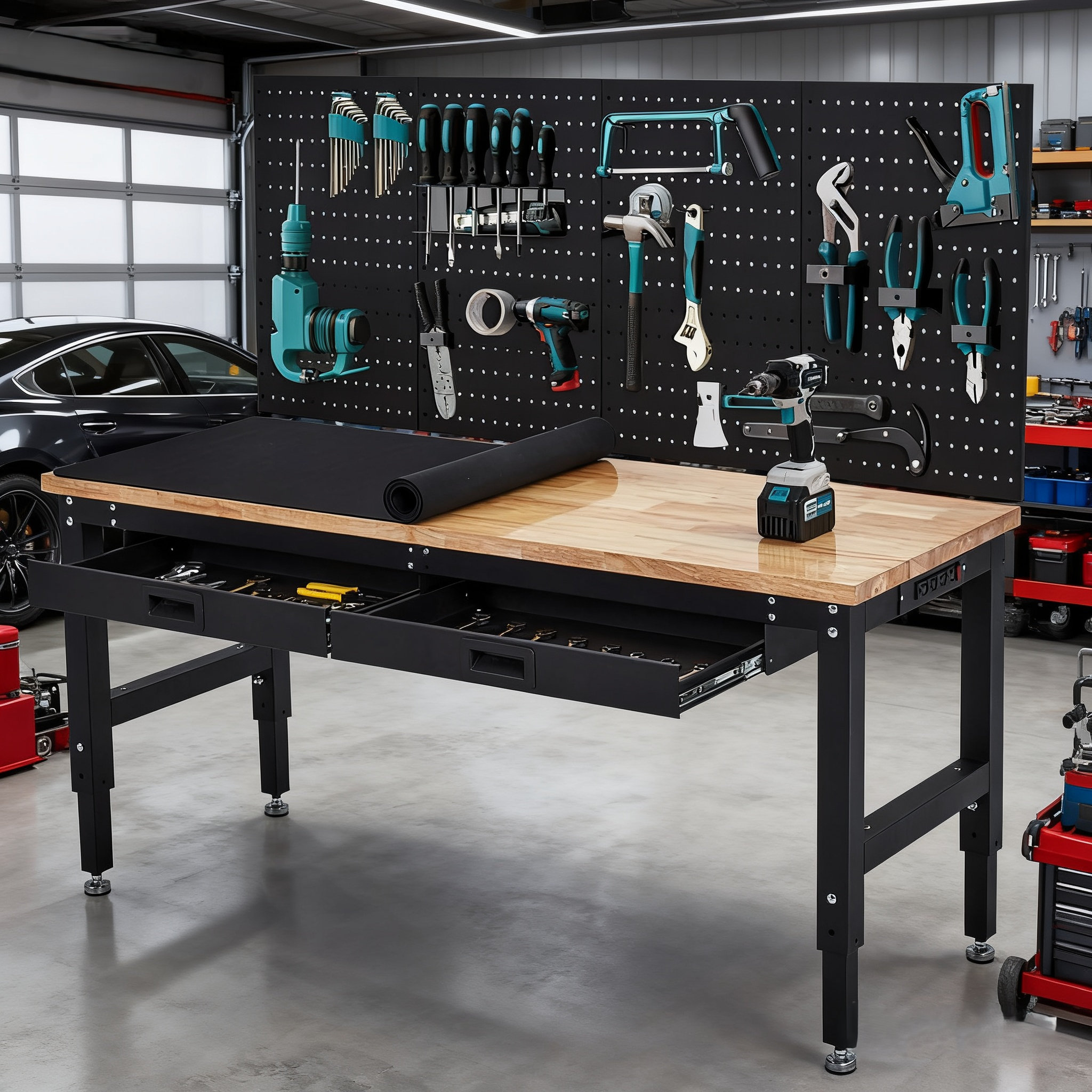
- Why: stable flat surface for assembly and clamping.
- Global Industrial Mobile Adjustable Height Workbench, 72″ W x 30″ D, 1-3/4″
Clamps & jigs

- Why: glue-ups and consistent assemblies
- WORKPRO Bar Clamps for Woodworking
- Kreg KPHJ320-22 Pocket-Hole Jig 320 with Classic 2 Inch Face Clamp
Essential portable/power tools
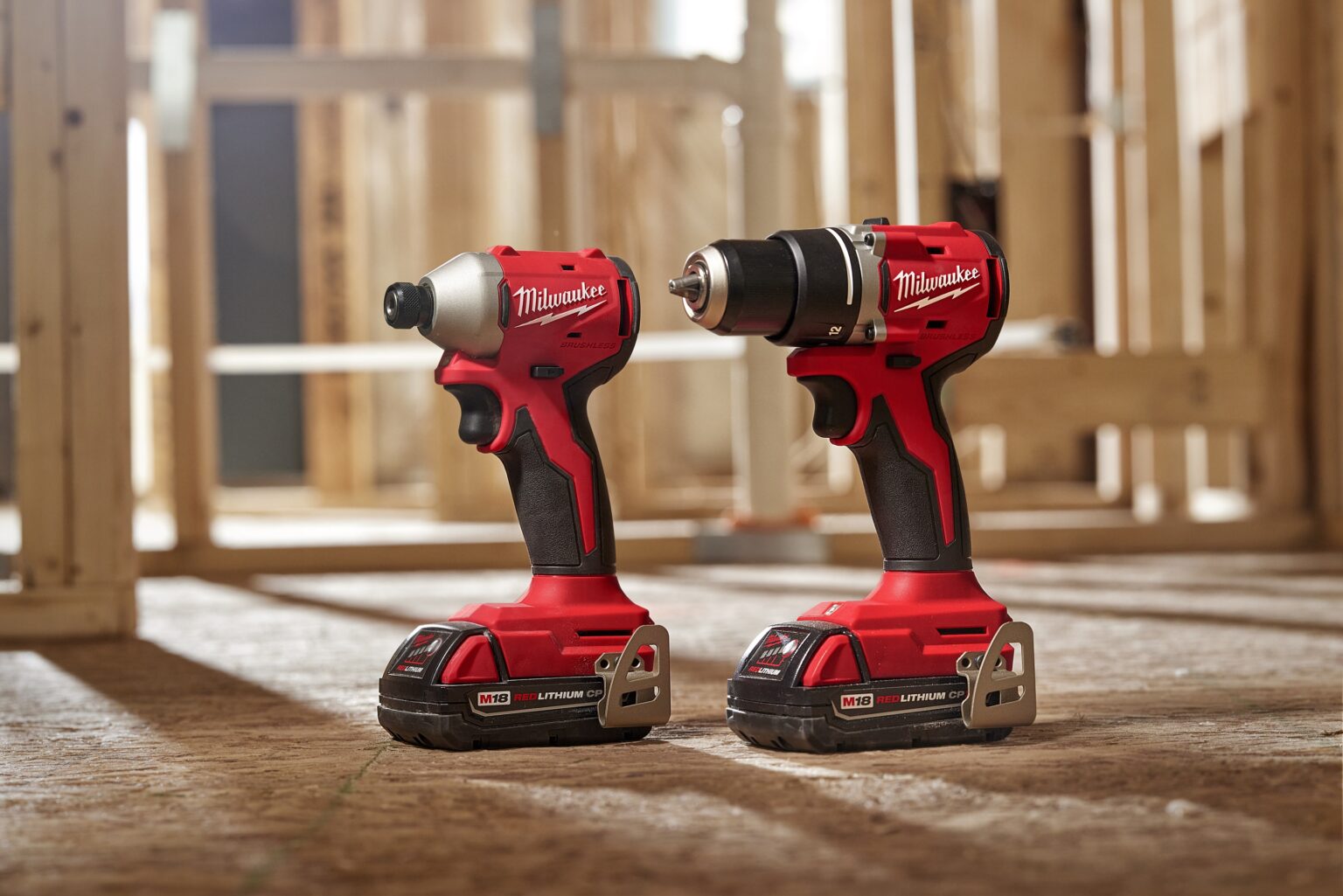
- Cordless drill + impact driver combo
- Circular saw (sheet breakdown)
- Random orbital sander
- Jigsaw, oscillating tool, angle grinder, compact router

Dust control strategy — tiered & practical
- Entry-level: Shop vac (5–9 gal) + DIY hood for miter saw + N95 masks.
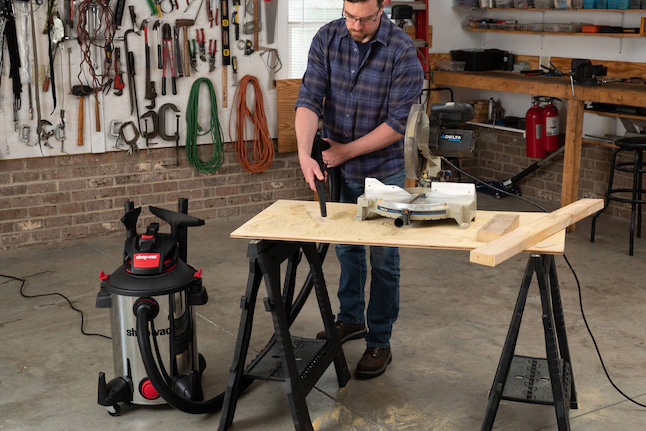
- Mid-level: Dedicated dust extractor (HEPA-ready), 2.5″ hoses, cyclone pre-separator.
- Pro-level: Central dust collection with 4″ main, blast gates, cyclone, HEPA final stage.

Shop storage & layout hacks
- Vertical plywood and lumber rack

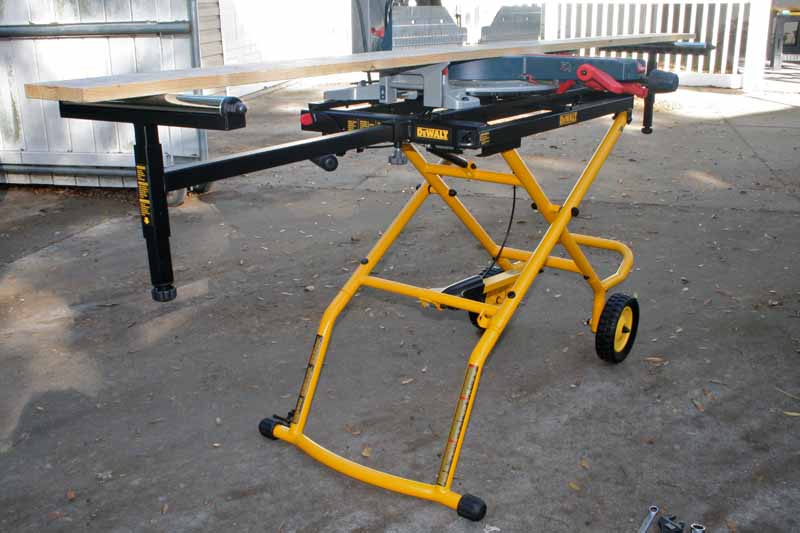
- Mobile bases for large tools
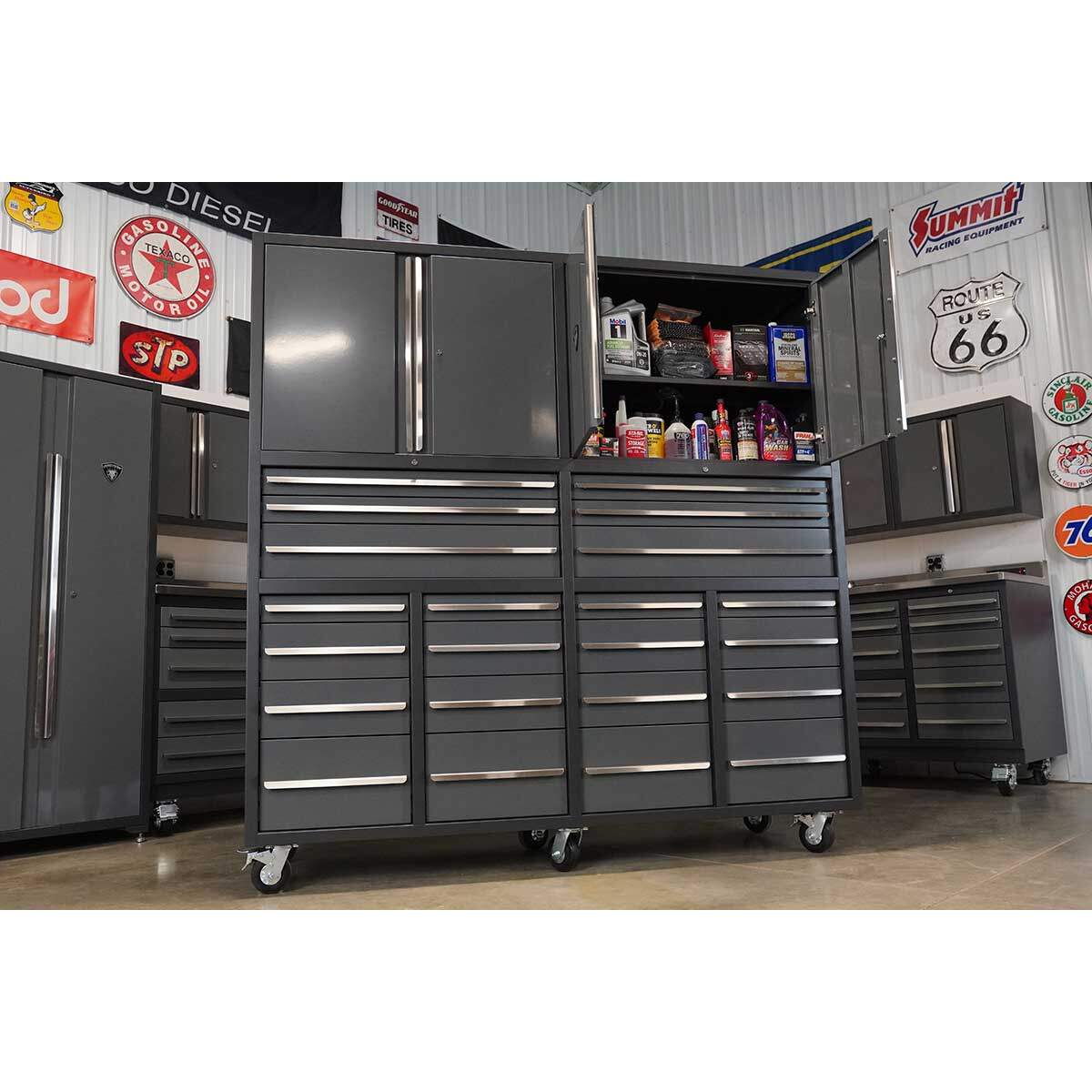
- Parts drawers & labeled consumables
Safety essentials & PPE
- Eye protection, face shield
- Respiratory: N95 or P100; supplied-air for finishes
- Hearing protection, gloves, push blocks, featherboards
- First aid & fire extinguisher
Consumables & small gear
- Blades (table saw, miter saw), router bits, sandpaper progression (80–320), glue & finishes, screws & fasteners
Shop checklist — day-zero setup (printable)
- Electrical: outlets, labeled circuits, correct amperage.
- Lighting: overhead plus task lamps.
- Dust: extractor/shop vac present; hood on table saw or miter saw.
- Floor: clean, level; anti-fatigue mats.
- Tools: table saw/miter saw/router aligned.
- Safety kit: PPE, fire extinguisher, first-aid.
- Storage: clamps, lumber rack, consumables.
- Workflow test: run a mock project and refine layout.
Budgeting & upgrade path
- $1,000–3,000: starter — compact table saw, miter saw, cordless kit, router, sander, vac, bench.
- $3,000–8,000: mid-level — hybrid/cabinet saw, jointer/planer, better dust extractor, router/table.
- $8,000+: pro — cabinet saw, central dust, wide planer, drum sander, full HVAC/ventilation.
What to Read Next
- Best Shop Vacuums & Dust Extractors 2026 – forge trade gear
- Best Angle Grinders 2026 —Metal & Masonry – forge trade gear
- Best Routers & Router Tables 2026 – forge trade gear
- The Best Miter Saw in 2026: Top Picks – forge trade gear
- Best Table Saws of 2026 (Complete Guide for Contractors and DIYers) – forge trade gear
Affiliate disclosure (place near the top or bottom of the post) Some links on this page may be affiliate links; we may earn a commission at no extra cost to you. We only recommend products we trust and would use ourselves.