INTRO Great work pants do more than look the part. They give you freedom to move, protect high-wear areas, store tools without sagging, and keep you comfortable for long shifts. In 2026, best-in-class carpenter pants combine modern stretch blends, reinforced knee systems, and smart pocketing while keeping durability front and center. This guide walks you through the materials and construction details that matter, shows the top pants across budgets and uses (framing, finish, cold-weather), and includes fit guidance, care tips, and an actionable buying checklist.
Who this guide is for
- New carpenters building a durable wardrobe
- Experienced carpenters upgrading pants for comfort and durability
- Site supervisors selecting standard-issue pants for crews
- DIYers wanting work-ready, durable pants for projects
Quick picks — top recommendations (at a glance)
- Best Overall:
- Carhartt Rugged Flex Rigby Dungaree (balanced durability + stretch)
- Best for Heavy-Duty Framing:
- Best for Finish Work / Mobility:
- 5.11 Apex Flex Carpenter Pants (lightweight, stretch)
- Best Budget:
- Dickies 874 Work Pants (durable, affordable)
- Best Cold-Weather:
- Best for Kneeling (knee pocket + pad):
Why the right pant matters
- Mobility: carpentry requires squatting, kneeling, rising, twisting — pants without gussets and stretch limit movement.
- Durability: abrasion on shins, knees, and pockets from fasteners and friction is constant — reinforced panels help pants last.
- Storage: dedicated tool pockets, hammer loops, and mobile pockets mean less reaching into tool belts for everyday items.
- Safety: proper fit avoids snagging, and reinforced knees reduce injury risk from rough surfaces.
Materials & Fabric Technology (what to pick and why)
Duck canvas / cotton duck (traditional)
- Pros: rugged, abrasion-resistant, develops a protective patina.
- Cons: heavier, can be stiff without treatment or blend.
- Best use: framing and heavy-duty tasks, outer layer.
Heavy twill / blended cotton (e.g., cotton/poly blends)
- Pros: improved tear resistance and less shrinkage; easier care.
- Cons: varies by weave; some still lack stretch.
Stretch blends (polyester/elastane/cotton)
- Pros: mobility for finish carpentry; less restriction when climbing ladders or kneeling.
- Cons: can be less abrasion-resistant than heavy duck unless reinforced.
Cordura / ballistic nylon reinforcement
- Pros: reinforced panels on knees and pocket areas; extreme durability where needed.
- Cons: adds weight; typically used only as patches or overlays.
Water-resistant or DWR-treated fabrics
- Pros: repel light moisture and resist stains on the job.
- Cons: treatment wears off over time; not a substitute for a rain pant.
Construction features that matter most
- Gusseted crotch: reduces seam stress and improves range-of-motion for climbing/working overhead.
- Articulated knees: pre-shaped knees sit well when kneeling without pulling fabric.
- Reinforced seat & inner thigh: protects against wear when sitting on abrasive surfaces or climbing.
- Hammer loop & tool pockets: dedicated hammer loops, tape pockets, and ruler pockets keep tools accessible.
- Knee pad pockets: external or internal pockets that accept gel or foam pads; external often works with overpants kneepads.
- Double or triple-stitching and bartacks at pocket corners: increases longevity at stress points.
- Zip or snap closures with storm flaps: avoid accidental pop-open pockets when bending.
- Adjustable waist tabs / internal drawcords: enable size fine-tuning, especially when layering.
How to choose by task / trade Framing & heavy carpentry
- Priorities: Durable duck or canvas, reinforced knees, hammer loop, and roomy fit for range-of-motion.
- Recommended: Duluth Fire Hose, Carhartt Rugged Flex models, or classic carpenter dungarees.
Finish carpentry & trim
- Priorities: Slimmer profile, stretch for mobility, shallow pockets, fewer abrasive panels so paint/finish isn’t snagged.
- Recommended: Lightweight stretch blends like 5.11 Apex Flex or premium workwear with stretch panels.
Electricians & HVAC techs
- Priorities: Mobility, flame-resistant (FR) pants when code dictates, adequate pocketing for testers and pens.
- Recommended: FR-certified pants from Bulwark or Carhartt FR lines, or Flame-resistant blends with work pockets.
Roofers & outdoor trades
- Priorities: abrasion resistance on shingle surfaces, strong knee reinforcement, water resistance if possible.
- Recommended: Cordura reinforced knees and heavy duck canvas options.
Cold-weather carpentry
- Priorities: Insulated pants, fleece liners, and room for base layers. Consider bibs for added warmth and coverage.
- Recommended: Insulated Carhartt or Duluth insulated pants with removable liners.
Fit & sizing — how to match style to body & movement
- Measure at the waist and inseam at the end of the day (when feet are slightly swollen).
- Fit types:
- Relaxed/loose fit: best for heavy duty and layering; more room for tools and movement.
- Straight fit: balanced for most users—room for movement without looking baggy.
- Slim/athletic: better for finish carpenters and those who like a modern look; may limit layering.
- Rise and crotch depth: Higher rise provides better coverage when bending down and supports tool belt placement.
- Inseam: Should allow knee bend without bunching or exposing skin; consider returns/exchanges when ordering online.
Top picks in-depth
Carhartt Rugged Flex Rigby Dungaree — Best Overall
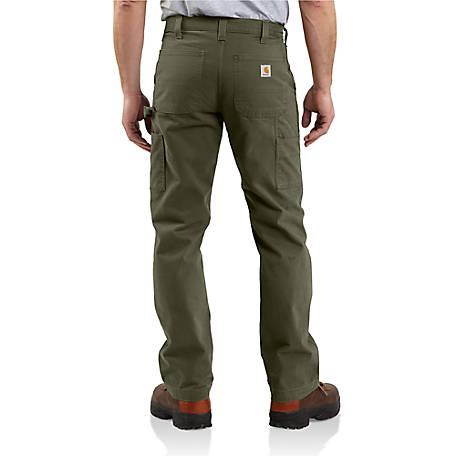
- Carhartt Rugged Flex Rigby Dungaree
- Rugged duck canvas with mechanical stretch for mobility.
- Reinforced front pockets and durable hardware.
- Good balance of durability and comfort for mixed carpentry tasks. Pros: Durable, good mobility, wide availability. Cons: Not the lightest option for hot climates. Best for: All-around carpentry, general contracting. Sizing note: True to size; consider waist adjustments for layering.
Duluth Trading Co. Fire Hose Carpenter Pants — Best for Heavy-Duty Framing
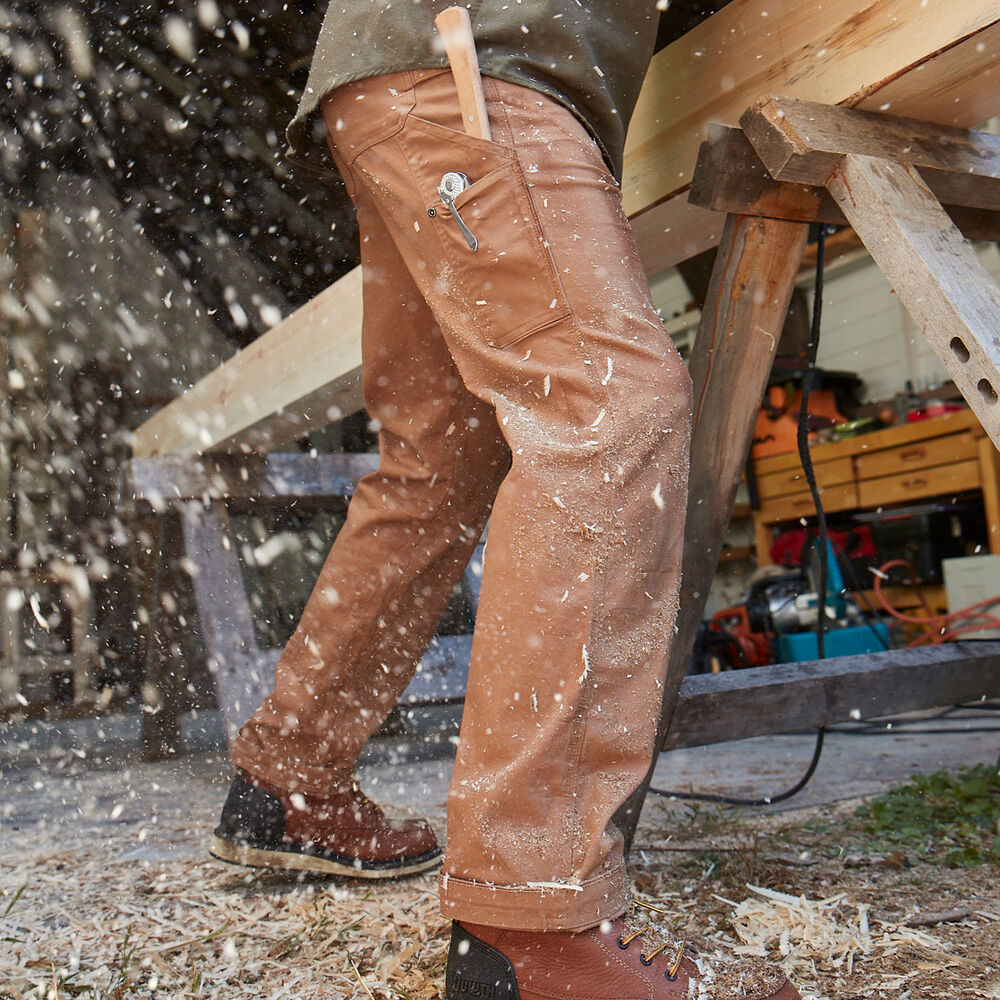
- Men’s DuluthFlex Fire Hose Relaxed Fit Carpenter Pants | Duluth Trading Company
- Heavy cotton duck (Fire Hose fabric) with reinforced knees and deep tool pockets.
- Built to take repeated abrasion from lumber and fasteners. Pros: Extremely durable, great pocketing, built-in tool storage. Cons: Heavier, not as breathable in hot weather. Best for: Framing crews, demolition. Sizing note: Generous fit — many size down if between sizes.
5.11 Apex Flex or equivalent — Best for Finish Work / Mobility
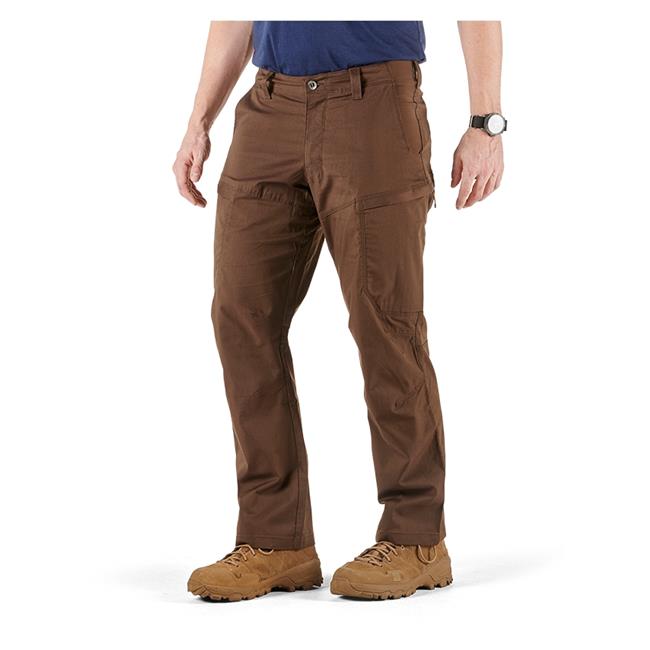
- 5.11 Apex Flex Carpenter Pants
- Technical fabric blends with discreet tool pockets, stretch, and low-profile silhouette.
- Great for finish carpenters who need mobility and a less bulky look. Pros: Lightweight, excellent range-of-motion, modern look. Cons: Not as abrasion-resistant as heavy duck materials. Best for: Finish carpentry, remodelers, interior work. Sizing note: Slimmer profile — size up if you prefer loose fit.
Dickies 874 Work Pants — Best Budget Option

- Dickies 874 Work Pants
- Classic twill build with durable construction and exceptional value.
- Easy to replace across a crew when budget matters. Pros: Extremely affordable, durable for light to moderate use. Cons: Limited stretch and fewer reinforced panels. Best for: Apprentices, budget crews, home DIYers. Sizing note: Runs true; machine easy-care fabric.
Carhartt Insulated Firm Duck Dungaree — Best Cold-Weather Option
- Carhartt Insulated Firm Duck Dungaree
- Thick duck canvas with insulation layer — ideal for cold job sites.
- Compatible with kneepads and layering under. Pros: Warm, durable, excellent for outdoor winter work. Cons: Heavy and less breathable — reserve for cold-weather tasks. Best for: Outdoor carpentry, winter framing crews. Sizing note: Size for base layers; you may need a slightly larger fit.
Carhartt with Knee Pad Pockets — Best for Kneeling

- Carhartt Rugged Flex with knee pads
- Purpose-built knee pockets (external or internal) that accept pads and protect knees from prolonged contact. Pros: Comfort when kneeling, replaceable pads, durable panels. Cons: May add bulk on the lower leg for some users. Best for: Flooring, cabinet installers, finishers who kneel frequently. Sizing note: Try on with knee pads to confirm fit; adjust for movement.
Pocket systems & tool access — what you actually need on the job
- Tape measure pocket: low front pocket with easy pull access.
- Carpenter ruler/riveted pocket: deep pocket for speed square or folding rule.
- Phone pocket with security flap: prevents losses when bending.
- Hammer loop: sturdy, low-profile loop that doesn’t interfere with walking.
- Utility knife pocket: secure and accessible without removing tool belt.
- Velcro/zip closures: reduce risk of losing small items when climbing or twisting.
Care & maintenance: how to keep pants working longer
- Washing: Cold water, mild detergent; avoid bleach.
- Drying: Air drying recommended for heavy duck; low heat for blended fabrics.
- Reproofing: Apply DWR re-treatment to water-resistant fabrics after washing.
- Repair: Bar-tack torn pockets and reinforce holes early. Use heavy thread and industrial sewing or local cobbler for repairs.
- Rotation: Keep 2–3 pairs in heavy-duty trades to extend life and reduce downtime.
Fit testing & in-store checklist
- Bring your work socks and any knee pads when trying new pants.
- Test movement: crouch, climb a ladder, walk stairs — check for binding at the crotch and waistband.
- Load test: put a tape, phone, and small tool in pockets to see how fabric holds up under load.
- Check knee pocket placement: put pads in and kneel to verify comfort and correct location.
- Try sitting and bending with tool belt on — pants should not ride down or pinch.
Common FAQs
- Q: Do I need knee pad pockets if I use over-knee pads?
A: Knee pad pockets keep pads in the correct position and reduce shifting. Over-knee pads are good for some tasks, but internal/external pockets are more practical for daily kneeling. - Q: How often should I replace work pants?
A: Varies by trade — heavy framers may replace every 6–12 months; finish carpenters might get 2+ years if they use lighter fabric blends and rotate pairs. - Q: Are FR pants necessary for electricians?
A: Only when the job requires or there’s arc-flash risk. Use FR-rated pants in those environments and follow site rules.
Crew purchasing & inventory tips
- Standardize models: pick 2–3 approved pants to simplify sizing and replacements.
- Bulk buying: negotiate team discounts with suppliers (Duluth, Carhartt, 5.11 often run crew programs).
- Issue policy: provide a small allowance or full provisioning depending on job requirements.
- Fit day: measure and fit pants on company time to reduce returns and ensure safety.
Printable checklist (copy/paste) Work pant buying checklist:
- Do they have a gusseted crotch? YES / NO
- Are knees reinforced or knee-pocketed? YES / NO
- Is there mechanical or fabric stretch? YES / NO
- Are tool pockets deep and functional? YES / NO
- Is the rise high enough for bending and ladders? YES / NO
- Can you fit a base layer or knee pad and still move? YES / NO
- Care instructions practical for your crew? YES / NO
Final thoughts & practical buying strategy
- Start with 1–2 high-quality pairs (Carhartt or Duluth) that match your most common tasks, rotate with a lightweight stretch pair for finish days, and add an insulated pair for cold seasons.
- Buy well-fitting pants and use insoles/knee pads to adapt your setup rather than buying multiple ill-fitting garments.
- Keep a repair kit and teach crewmembers how to bar-tack and patch early — small repairs extend life and save money.
What to Read Next
- Best Work Boots 2026 — Safety, Comfort & Durability – forge trade gear
- Best Shop Vacuums & Dust Extractors 2026 – forge trade gear
- Best Angle Grinders 2026 —Metal & Masonry – forge trade gear
- Best Routers & Router Tables 2026 – forge trade gear
Affiliate disclosure Some links on this page may be affiliate links; we may earn a commission at no extra cost to you. We only recommend products we trust and would use ourselves.